

Acne is an inflammatory skin condition that develops when hair follicles become blocked with oil, dead skin cells, and bacteria. It shows up as clogged pores, pimples, and, in more severe cases, deep cysts, most often across the face, chest, and back. While it is commonly associated with adolescence, many adults still experience it well into their thirties and forties.
Acne scars form when that inflammation damages the collagen structure beneath the surface. As the skin repairs itself, it rebuilds that collagen imperfectly, leaving either a depression where tissue was lost or a raised area where the body produced too much. This is a structural change rather than a surface one, which is why no topical product can correct it and why the uneven texture persists long after the breakout has cleared.
It is worth separating true scarring from the flat brown or red marks that linger after a pimple heals. Those marks are post-inflammatory hyperpigmentation, meaning the skin surface is intact, and only the pigment has shifted. They often fade on their own over several months, while genuine scarring requires treatment that reaches into the dermis.
Identifying which type of scarring you have matters more than it might seem, because a treatment that works well on one type is often ineffective on another. Most patients have a combination of two or three across different areas of the face.
These are broad, shallow depressions with soft sloping edges that give the skin a gently uneven surface. They form when fibrous bands tether the skin downward to the tissue underneath, pulling it inward. Because the underlying problem is the tether rather than the surface itself, resurfacing alone rarely resolves them, and subcision is usually the starting point.
Boxcar scars are round or oval depressions with sharply defined vertical walls, usually wider than they are deep. They appear most often on the cheeks and temples where the skin is thicker. Their well-defined edges make them responsive to treatments that remodel collagen through the full depth of the scar, such as Genius RF Microneedling.
These are narrow, deep punctures extending well into the dermis, often resembling small open pores. They are the most challenging type to treat because their depth exceeds what most resurfacing devices reach. Approaches that target each scar individually tend to work better than broad treatment across the whole area.
Rather than losing tissue, these form when the body produces excess collagen during healing, leaving a raised and firm area. They occur more frequently on the jawline, chest, and back than on the cheeks. Treatment focuses on flattening and softening the scar rather than filling a depression.
These flat discolored marks are not scars in the structural sense, since the skin surface remains intact. They are more common and more persistent in deeper skin tones, sometimes lasting a year or longer without treatment. Because the mechanism is different, they respond better to chemical peels and pigment-targeted treatment than to textural resurfacing.
Family history may increase susceptibility to acne.
Every effective acne scar treatment works through controlled injury. A device or technique creates precise, limited damage within the dermis, and the body responds by producing fresh collagen and elastin as it repairs. Over the following weeks, that new collagen fills depressions from underneath and reorganizes disordered scar tissue.
What separates a strong result from a mediocre one is usually sequencing, not device selection. Releasing tethered scars with subcision before resurfacing, for instance, lets the resurfacing work on a surface that can actually lift rather than one still anchored down. Layering a regenerative treatment such as exosome therapy after an energy-based session gives the healing response more material to work with.
This is also why most plans combine several treatments across a series of sessions rather than relying on one. A face with rolling scars on the cheeks and ice pick scars on the nose genuinely needs two different approaches.
The treatments below are selected and sequenced based on the scar types present, their depth, and how your skin tends to heal. Most patients receive a combination rather than a single modality, paired with a personalized skincare regimen to support results between sessions. You can browse the full range of options across our skin services and laser and energy treatments.
The treatments above match the type of scarring present rather than applying them uniformly. This table connects each scar type to the approach that tends to work best for it, and most patients need more than one because they have more than one type.
Scar Type | Approach That Works Best | Why | Typical Downtime |
|---|---|---|---|
Rolling | Subcision, often with PRP/PRF BioFiller | The scar is tethered from below, so it has to be released before anything else helps | Bruising for 5 to 10 days |
Boxcar | Defined edges respond well to collagen remodeling through the full scar depth | 2 to 5 days of redness | |
Ice Pick | Focused treatment of each scar, sometimes with NeoGen Plasma | Depth exceeds what broad resurfacing devices reach | Varies by technique |
Hypertrophic | Treatments that flatten and soften rather than fill | Excess collagen is the problem, so adding volume would worsen it | Minimal |
Post-Inflammatory Pigment | Chemical peels and pigment-targeted laser | The skin surface is intact, so this is a pigment issue rather than a textural one | Minimal to 3 days |
The strongest candidates are patients whose active acne is under control and whose expectations are set toward meaningful improvement rather than complete erasure. Treating scars while breakouts are still active can create new scarring alongside the old, so most plans begin once the acne has settled.
Skin tone influences which devices are appropriate, not whether treatment is possible at all. Deeper skin tones carry a higher risk of pigment change with aggressive ablative resurfacing, which is why radiofrequency microneedling and non-ablative options are often the better route. We make that assessment at your consultation before scheduling anything.
Treatment may need to be delayed if you are pregnant or nursing, have taken isotretinoin within the past six months, have an active skin infection in the area, or have a history of keloid formation. Certain autoimmune conditions and medications affecting healing also warrant a longer conversation first.
Some treatments produce visible change right away, particularly subcision combined with filler, where the release and volume restoration are immediate. Energy-based treatments work on a slower timeline, with the first noticeable improvement usually appearing four to six weeks after a session. The fuller result continues to develop over three to six months as collagen remodeling completes.
Most patients complete three to six sessions spaced four to six weeks apart, though this varies considerably with scar depth and type. Rolling scars treated with subcision may need only two or three, while extensive boxcar and ice pick scarring often requires the full range plus maintenance afterward. Your consultation provides a specific number rather than a general estimate, and it can be revisited as your skin responds.
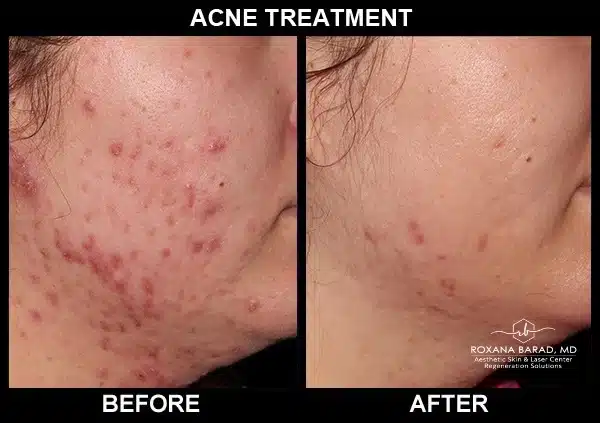
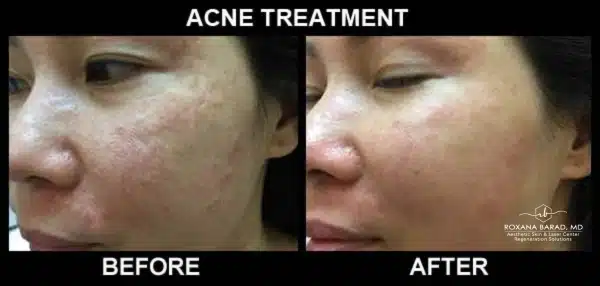
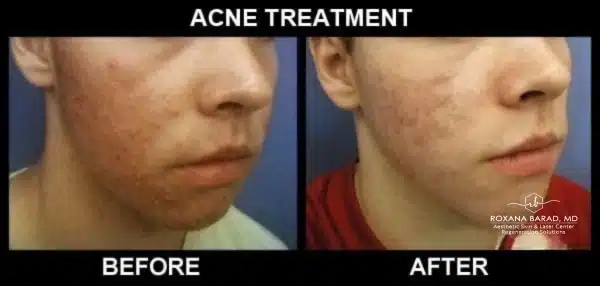
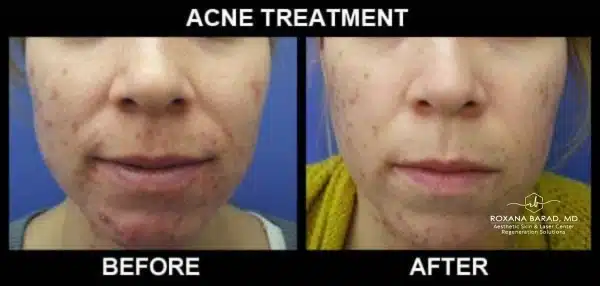
Complete removal is not realistic, and any practice promising it is overselling. What is genuinely achievable is substantial improvement, commonly a 50 to 80 percent reduction in the visibility of depressed scarring over a full course of treatment. You can see the range of outcomes in our before-and-after gallery, which gives a more accurate picture than any percentage.
Yes, with appropriate device selection and adjusted settings. Deeper skin tones carry a higher risk of post-inflammatory hyperpigmentation with aggressive ablative resurfacing, so radiofrequency microneedling and non-ablative options are generally preferred. A pre-treatment regimen is sometimes used to reduce that pigment risk further.
To an extent, yes. Several treatments that improve scarring also reduce oil production and bacterial load, so mild active acne often improves alongside the textural work. Moderate to severe active acne is different, since treating inflamed skin risks creating new scarring; in that case, controlling the acne becomes the first step.
Downtime ranges from essentially none to about a week depending on which treatment you receive. Tixel and lighter resurfacing typically leave one to two days of redness that makeup can cover, while MOSAIC Laser runs closer to three to five days. Subcision can cause bruising that lasts up to ten days, which is worth planning around if you have an event coming up.
Combining treatments is not just possible; it is usually the recommended approach. Different scar types respond to different mechanisms, so a plan that releases tethering, restores volume, and resurfaces the surface will outperform any single modality used alone. The sequence and spacing matter as much as the combination itself, which is why the plan is mapped out in advance rather than decided session by session.
Topical numbing applied about thirty minutes beforehand handles most of the discomfort, and subcision adds local anesthetic on top of that. Patients generally describe pressure, warmth, and a snapping sensation rather than sharp pain. The hours afterward feel similar to a sunburn, which most people manage without anything stronger than acetaminophen.
Cost depends on which treatments your plan includes and how many sessions it involves, since a subcision and BioFiller plan prices differently from a full resurfacing series. Pricing is quoted at consultation once the plan is defined, rather than as a per-session rate that would not reflect what you actually need. Financing is available through Cherry on our patient financing page, with plan lengths from three to twenty-four months, 0% APR options for eligible patients, and no hard credit check to apply.
Acne scarring responds far better to treatment when the plan is built around your specific scar types, and that begins with someone examining your skin closely. A consultation at Aesthetic Skin & Laser Center gives you a clear assessment of what you are dealing with and a realistic plan to address it.
Dr. Roxana Barad, MD, FAACS, and the team see patients from across Pittsburgh and the surrounding East End. Call 412-683-3358 to schedule, or contact us through the form below. We are located at 4312 Penn Ave, Pittsburgh, PA 15224, a short drive from Shadyside, Squirrel Hill, and the Strip District.