
Gentle chemical peel formulated for intimate and sensitive areas
About 30 minutes
Three to six sessions, spaced according to the area and your skin
Minimal. Most patients report warmth or light tingling
None, though friction, heat, and sun need to be avoided for a short period
Gradual, building across the course
Required before treatment. See candidacy below

Skin in intimate areas darkens for reasons unrelated to hygiene or health. Friction from clothing, years of shaving or waxing, hormonal changes, and pregnancy can cause pigmentation to build in the bikini line, underarms, and inner thighs. It is extremely common, and it is one of the concerns patients are least likely to raise with anyone.
The Pink Intimate System at Aesthetic Skin & Laser Center in Pittsburgh, PA, is a gentle peel formulated specifically for these areas. Developed by the Italian medical research company Promoitalia, its manufacturer describes it as the first non-invasive peel created to lighten the female genital area. Treatment takes about 30 minutes, requires no downtime, and is performed privately under physician supervision.
The Pink Intimate System is a chemical peel formulated at a strength and composition suited to intimate and sensitive skin, which is thinner and more reactive than skin elsewhere on the body. Standard peels are not appropriate in these areas, which is why a dedicated system exists rather than an adapted facial protocol.
It is used across the bikini line, labia, perianal region, inner thighs, and underarm. It works on two things at once: reducing accumulated pigmentation and improving skin texture and firmness. Treatment is delivered as a course rather than a single session, and results build gradually across it.
It is worth being clear about what this treatment is for. It addresses pigmentation that has developed over time from friction, hair removal, hormones, or pregnancy. It is not about changing your natural skin tone, and a consultation will be honest with you about which of those two you are actually describing.

The peel solution is applied to the treatment area, where its active ingredients work on the pigment that has accumulated in the upper layers of the skin while encouraging cell turnover. As newer skin comes through, accumulated discoloration becomes less concentrated, and tone becomes more even.
The same process supports collagen production, which is why patients often notice the skin feeling firmer and smoother as well as looking more even. That secondary effect is part of why the treatment suits patients whose concern is texture and laxity rather than pigment alone.
A session takes around 30 minutes. Most patients describe warmth or light tingling during application rather than pain. You can return to normal activity immediately, with some short-term restrictions covered in the aftercare section below.
Reduces accumulated pigmentation from friction, hair removal, and hormonal change.
The peel smooths roughened skin alongside addressing pigment.
Collagen stimulation improves elasticity, which matters to patients whose concern is laxity rather than color.
The strength and composition are designed for intimate skin rather than adapted from a facial peel.
You return to normal activity immediately, with short-term restrictions on heat and friction.
Around 30 minutes, which fits into a working day without explanation.
Treatment is delivered discreetly, under physician oversight, in a setting where this is a routine appointment.
This treatment is used wherever skin is delicate and pigmentation has built up over time:
Helps improve the appearance of dark spots and uneven pigmentation along the bikini area.
Addresses visible discoloration on delicate external intimate skin using an area-appropriate treatment approach.
Helps create a more even-looking skin tone in the external perianal region.
Targets areas of discoloration and uneven tone that can develop along the inner thighs.
Helps improve visible darkening within the folds and creases surrounding the bikini area.
Addresses uneven pigmentation and darkened skin in the underarm area.
Can be used to improve the appearance of uneven or unwanted pigmentation around the areolas.
Helps reduce the appearance of dark spots and uneven skin tone on the knees.
Targets visible discoloration and uneven tone on the elbows.
Helps improve the appearance of pigmentation and uneven skin tone on the front, sides, or back of the neck.
Patients come to us with concerns that are common and rarely discussed:
Most healthy adults concerned about pigmentation or texture in intimate areas are suitable candidates. The treatment suits patients whose darkening has developed over time from friction, hair removal, hormonal change, age, or pregnancy, and who want a gradual improvement rather than a dramatic one.
Skin tone assessment comes first, and it matters more in this treatment than in most. Deeper skin tones produce more pigment in response to inflammation, which means a peel performed at the wrong strength can cause the very darkening it was meant to address. Patients across the full Fitzpatrick range are treated here, but the protocol is adjusted for tone, and a patch test may be performed before a full session. Any provider who does not raise this with you before treating an intimate area is not assessing you properly.
Treatment is postponed or avoided during pregnancy and breastfeeding, if you have an active infection, open skin or a rash in the area, if you have a history of herpes simplex in the treatment area without antiviral cover, if you have used isotretinoin recently, or if you have active dermatitis or eczema there. Recent hair removal also affects timing, which is covered below. Your consultation at Aesthetic Skin & Laser Center is private and unhurried, and if treatment is not appropriate, you will be told directly.
The appointment is private throughout and handled with the same discretion as any intimate examination. You will be draped, and only the area being treated is exposed.
The area is cleansed, and the peel solution is applied evenly. Most patients describe warmth or a light tingling that builds slightly and then settles. The solution stays on for a set period depending on the area and your skin, then is removed, and the area is soothed. The whole appointment takes around 30 minutes.
Afterward, the skin may look slightly pink and feel warm, similar to mild sun exposure. There is no dressing and nothing visible through clothing. You can leave and continue your day, following the aftercare below.

Results build across the course and typically hold for several months to a year, depending on the area and on what caused the pigmentation in the first place.
That last point matters. If friction from clothing or a particular hair removal method is what darkened the skin, and nothing about that changes, pigmentation will gradually return. Patients who switch to laser hair removal often hold their results considerably longer, because removing the repeated irritation removes the cause rather than the symptom. Maintenance sessions are common, and your provider will suggest an interval based on how your skin responds.
Physician-led care: Treatment is overseen by Dr. Roxana Barad, a board-certified physician with over 20 years in aesthetic medicine.
Skin tone assessed properly: Fitzpatrick type is evaluated before treatment, and the protocol is adjusted accordingly, because with this treatment, that is the difference between a good result and a worse problem.
A discreet, unhurried setting: This is a routine appointment here. You will not be rushed, and you will not be made to explain yourself.
Honest assessment: If your concern is natural tone rather than accumulated pigmentation, or if treatment is not appropriate for your skin, you will be told.
Personalized course planning: Number of sessions, spacing, and strength are set for your skin and the area being treated.
Full aftercare guidance: You leave knowing exactly what to do, which, on an intimate-area treatment, makes a substantial difference to the result.
Aesthetic Skin & Laser Center offers the Pink Intimate System in Pittsburgh, PA, welcoming patients from across the region, including:
A course of three to six sessions is typically recommended, depending on the area and how much pigmentation has accumulated. Your provider will set the number and spacing at your consultation and adjust as your skin responds.
Most patients describe warmth or light tingling during application rather than pain. The formulation is adjusted for the sensitivity of the area being treated, and the solution is removed if you find the sensation more than comfortable.
Mild pinkness and warmth similar to light sun exposure, settling within hours. Some light flaking over the following days is normal. There is nothing visible through clothing and no dressing required.
Yes. It is most commonly combined with laser hair removal, which addresses the friction and irritation that caused the pigmentation in the first place. Timing between treatments is planned so the skin is not being worked on from two directions at once.
Several months to around a year, depending on the area and on whether the original cause has changed. Continued shaving or waxing in a treated area will gradually bring pigmentation back, which is why maintenance sessions are common.
The bikini line, labia, perianal region, inner thighs, and underarms are the most frequently treated. Other areas where skin is delicate, or pigmentation has accumulated, may also be suitable, which your provider will confirm at consultation.
Cost depends on the area treated and how many sessions your course includes, so pricing is confirmed at your consultation rather than quoted in advance. Patient financing is available for patients who would prefer to spread the cost.
Treatment is avoided during pregnancy and breastfeeding, and postponed if you have an active infection, open skin, a rash, or active dermatitis in the area. A history of herpes simplex in the treatment area requires antiviral cover beforehand. Recent isotretinoin use and recent hair removal both affect timing.
Beforehand, stop shaving or waxing the area several days ahead, avoid sun and tanning, and pause retinoids and acids. Afterward, avoid friction, heat, swimming, sun, and hair removal for several days, wear loose cotton clothing, and use only the aftercare products you are given.
It is used across the full range of skin tones, but tone genuinely affects how treatment is planned. Deeper skin produces more pigment in response to inflammation, so a peel at the wrong strength can worsen darkening rather than improve it. Your Fitzpatrick type is assessed before treatment, the protocol is adjusted accordingly, and a patch test may be performed first. This is the single most important part of the consultation for this treatment.
If pigmentation or texture in intimate areas is something you have been thinking about, a consultation is a private, matter-of-fact conversation about whether this treatment suits your skin. There is no assumption about why you are asking.
Visit us at 4312 Penn Ave, Pittsburgh, PA 15224, call 412-683-3358, or contact us online to schedule with Dr. Barad and the team.
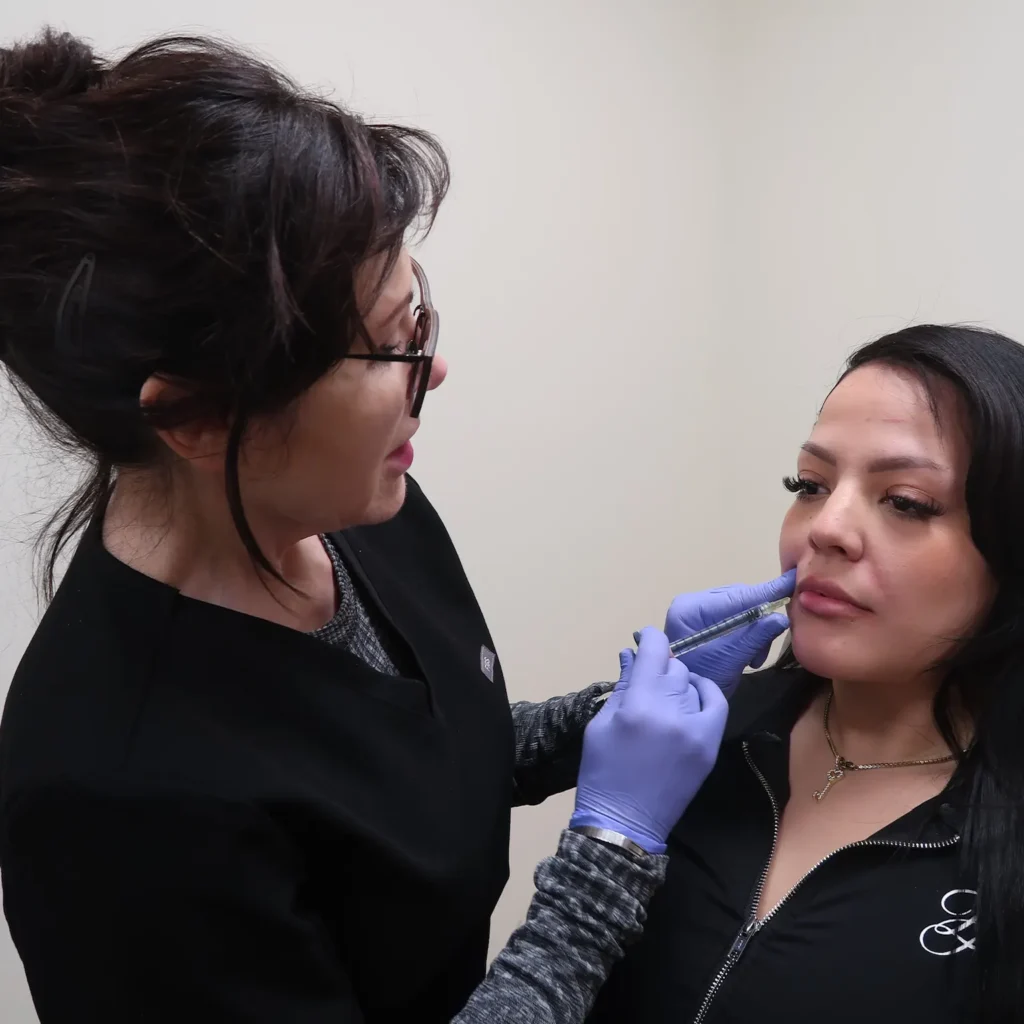
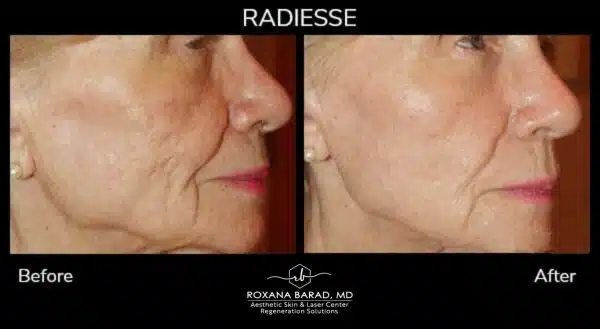
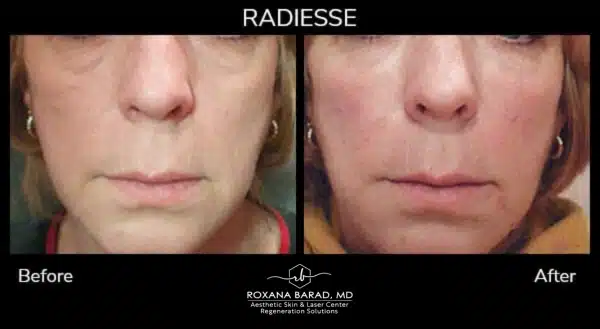
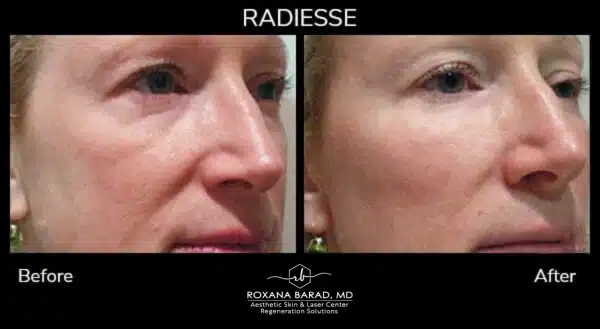

Radiesse works in two stages. First, the calcium hydroxylapatite microspheres provide immediate volume to the treated area, smoothing out wrinkles and adding fullness to areas such as the cheeks, nasolabial folds, or hands. Over time, these microspheres stimulate the body’s natural collagen production, which helps to rebuild the skin’s structural support and improve its overall texture and firmness. The treatment typically takes about 30 minutes, and results are visible immediately, with continued improvement over the following months as collagen production increases. Radiesse is particularly effective for patients with more advanced signs of aging, as it offers both immediate and long-term rejuvenation.
Radiesse results typically last for up to a year or more, depending on the treatment area and the individual’s rate of collagen production.
Most patients experience only mild discomfort during the procedure, and a topical numbing cream can be applied to enhance comfort if necessary.
Results from Radiesse are visible immediately after the procedure, with continued improvement over the next few months as collagen production increases.
Yes, Radiesse is FDA-approved and composed of biocompatible calcium hydroxylapatite, which is naturally absorbed by the body over time.
Yes, Radiesse can be combined with other aesthetic treatments, such as neuromodulators or laser therapy, to enhance overall rejuvenation results.
Unlike hyaluronic acid fillers, Radiesse cannot be dissolved by enzymes. It is composed of calcium-based microspheres that are gradually absorbed by the body and stimulate collagen production.
Radiesse is made of calcium hydroxylapatite (CaHA) microspheres suspended in a gel carrier. The gel provides immediate volume, while the CaHA stimulates natural collagen production for longer-term results.
Yes. Radiesse is considered a dermal filler, but it also functions as a biostimulatory injectable because it encourages your body to produce collagen while providing immediate contour improvement.
When injected by an experienced provider, Radiesse is designed to stay in the targeted treatment area. Proper placement technique helps ensure safe and predictable results.
A topical numbing agent may be applied before treatment to enhance comfort. Radiesse injections are generally well-tolerated and do not require general anesthesia.
The cost of Radiesse varies depending on the treatment areas and the amount of product needed to achieve your goals. During your consultation at Aesthetic Skin & Laser Center, your provider will review personalized pricing and develop a treatment plan tailored to you.
Flexible financing options are available, including payment plans through Cherry. Cherry offers quick approvals and manageable monthly payment options, helping you move forward with treatment in a way that fits your budget.
Common side effects may include mild swelling, redness, tenderness, or bruising at the injection sites. These effects are typically temporary and resolve within a few days.