
Radiofrequency delivered through gold-plated insulated microneedles
45 to 60 minutes including numbing
Topical numbing applied first. Pressure and warmth during treatment
Redness and swelling for 24 to 36 hours; up to a week to fully settle
A series of sessions spaced several weeks apart
Builds over three to six months as collagen forms
Suitable across all Fitzpatrick types. RF does not target pigment
A year or longer with maintenance and consistent skincare

Skin loses firmness because the collagen and elastin holding it in place decline, and no topical product reaches the depth where that happens. Surface treatments improve texture. They do not tighten.
Genius RF Microneedling at Aesthetic Skin & Laser Center in Pittsburgh, PA, works at that depth. Insulated microneedles deliver radiofrequency energy into the dermis at a precisely controlled level, triggering the collagen response that firms skin from underneath. It is the treatment we reach for when laxity is the concern rather than texture alone, and it is suitable across all skin tones for reasons explained below.
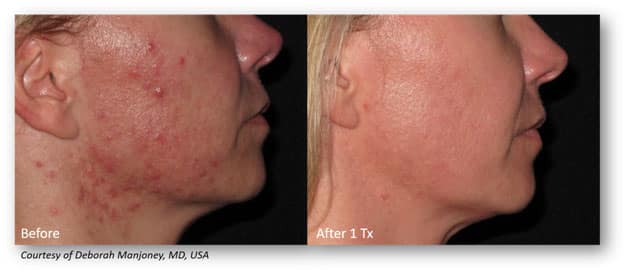
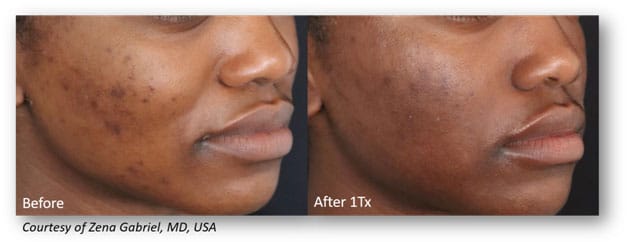
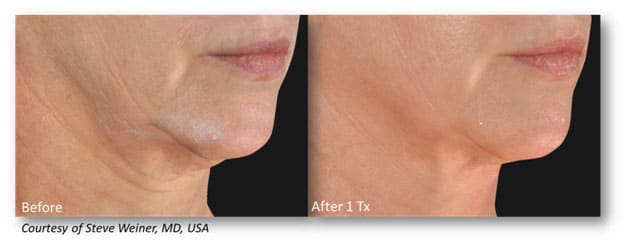
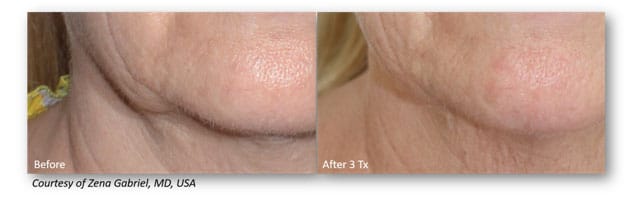
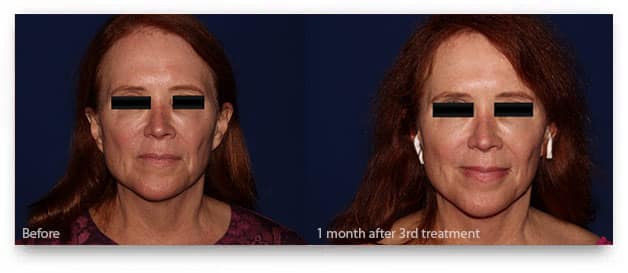
Genius RF Microneedling combines two mechanisms in one treatment. Fine needles create controlled micro-injuries that trigger the skin’s natural repair response, and radiofrequency energy is delivered through those needles into the deeper layers of the dermis, where it heats tissue enough to stimulate collagen and elastin production.
The needles are gold-plated and insulated along their length, which means energy is released only at the tip, at the depth selected. The surface of the skin is not heated in the process. That detail is what makes the treatment suitable for all skin types and tones, since the pigmentation risk associated with energy devices comes from heat delivered at or near the epidermis.
It is used for skin laxity, fine lines, acne, surgical scarring, stretch marks, and overall texture, on the face and on the body. Because it works through collagen rather than removal, results develop over months rather than appearing immediately.
The Genius system measures skin impedance in real time and adjusts the energy delivered on each pass, at each depth, for each patient. That feedback loop is what separates it from devices that deliver a fixed setting regardless of what the tissue is doing, and it is the reason the same device can treat delicate skin and thicker scarred tissue in the same session.
Needle depth is selected by the provider based on the area and the concern. Shallow depths address fine lines and texture; deeper settings reach the tissue responsible for laxity and scarring. Energy is released at the needle tip rather than along the shaft, which keeps the heating exactly where it was intended.
What follows is a healing response. Collagen and elastin production increase over the weeks after treatment and continue for months, which is why the result you see at six months is better than the one at six weeks. A series produces more than a single session because each treatment adds to the response.
The radiofrequency component reaches depths that standard microneedling cannot, which is what produces firming.
RF does not target pigment, and insulated needles keep heat away from the epidermis, so the pigmentation risk that limits lasers does not apply.
Settings are adjusted for delicate facial skin and thicker body tissue within the same session.
Acne, surgical, and traumatic scars all respond, because the energy reaches the tethered tissue underneath.
Stretch marks, loose abdominal skin, and crepey arms are all treatable.
The system reads the tissue and adapts on each pass rather than delivering a fixed setting.
One to two days of redness for a treatment working well below the surface.
A year or more with maintenance, because the collagen built is your own.
Depth and energy are adjusted for each area, which is why the same device treats delicate facial skin and thicker body tissue:
The most common treatment, addressing laxity, texture, and fine lines together.
Fine lines and early textural change across a broad area.
Where midface laxity shows first and where acne scarring most often concentrates.
Treated at shallower depths with adjusted settings.
Enlarged pores and textural irregularity.
The fine vertical lines around the mouth, treated carefully given the thinner skin.
Texture and early laxity through the lower face.
Definition along the jaw border, one of the areas patients most want tightened.
Early softening at the jawline, where the tightening effect is most visible.
Under the chin, addressing laxity and crepey texture.
Thin skin that shows laxity early and responds well to controlled depth.
The chest, where crepiness and sun damage combine.
Loose skin and crepey texture, frequently requested after weight change.
Laxity and stretch marks, including after pregnancy.
Texture, stretch marks, and mild laxity.
Texture and firmness, treated at body depths.
This treatment addresses concerns that originate below the surface, which is what separates it from treatments that work on the skin you can see:
Good candidates are adults with mild to moderate skin laxity, scarring, stretch marks, or textural concerns who want improvement without surgery and can accept a couple of days of visible redness. It suits all skin tones, which is unusual among energy devices and is a genuine reason patients are referred here.
The radiofrequency component creates specific exclusions. Treatment is not performed during pregnancy or breastfeeding, and it is not appropriate for patients with a cardiac pacemaker, an implanted defibrillator, or metal implants in or near the treatment area. Gold allergy matters here specifically, because the needles are gold-plated.
Treatment is also postponed for active infection or open skin in the area, active acne in the treatment zone, and recent isotretinoin use. A history of keloid scarring requires careful discussion, since any treatment creating controlled injury carries risk in patients who scar that way. Patients with significant laxity may be better served by a surgical consultation, and we will say so rather than selling a series that cannot reach the goal.
Topical numbing is applied and left for around 30 minutes, which is the longest part of the appointment. Your provider then selects depths and energy settings for each area being treated.
The handpiece is placed against the skin, and the needles deploy, delivering energy at the selected depth before withdrawing. Most patients describe pressure and warmth rather than sharpness, with the bonier areas along the jaw and forehead being the most noticeable. Treatment itself takes 20 to 30 minutes for a full face.
Afterward, the skin is red and feels warm and tight, similar to moderate sunburn. Some swelling is normal, particularly around the eyes if that area was treated, and both settle substantially within 24 to 36 hours.

Results build rather than appear. Collagen and elastin production continue for three to six months after each session, so the fullest result arrives well after the last appointment rather than at it.
Once built, that collagen is yours. Most patients hold their results for a year or longer, and many schedule a maintenance session annually to stay ahead of continued aging. How long it lasts depends on how quickly your skin was changing to begin with, your sun exposure, and your skincare. Skin continues to age regardless, which is why maintenance extends the result rather than the treatment stopping the process.
Several treatments here address laxity, and they work at different depths through different mechanisms:
Treatment | How It Works | Downtime | Best Suited To |
|---|---|---|---|
Genius RF Microneedling | RF delivered at controlled depth through insulated needles | 1 to 2 days of redness | Laxity with scarring or texture, and all skin tones |
Microneedling with PRP | Micro-injury plus your own platelets, no RF | 1 to 2 days of redness | Texture and skin quality without the tightening element |
Attiva RF | Subdermal RF delivered under the skin | Several days | Deeper laxity, particularly the lower face and neck |
Sofwave | Focused ultrasound at a set depth | Minimal | Lifting the brow and firming without needles |
PDO Threads | Absorbable sutures placed to lift tissue | Several days | Mechanical lift, where tightening alone is not enough |
The question we are asked most is how this differs from standard microneedling. Both create controlled micro-injury to stimulate collagen. Only Genius RF adds radiofrequency at depth, which is what produces actual tissue tightening rather than surface improvement alone. If your concern is texture, pore size, or skin quality, standard microneedling does the job at lower cost. If laxity is part of the picture, the RF component is what you are paying for. Attiva RF, Sofwave, and PDO Threads go further again, and your consultation decides between them.
Physician-led treatment: Settings and depth are selected under the oversight of Dr. Roxana Barad, a board-certified physician with over 20 years in aesthetic medicine.
The right device for your concern: With several tightening treatments available here, the recommendation comes from matching the depth and mechanism to your skin rather than from what is in the room.
All skin tones treated: This is one of the few tightening treatments suitable across the full Fitzpatrick range, and it is a genuine reason patients come here.
Depth planned per area: Face, neck, chest and body are treated at different settings within the same plan.
Honest about what it will not do: If your laxity is beyond what energy can address, you will be told rather than sold a series.
Part of a full skin plan: This sits alongside our other skin treatments so a plan can be sequenced rather than treatments sold individually.
Aesthetic Skin & Laser Center offers Genius RF Microneedling in Pittsburgh, PA, welcoming patients from across the region, including:
Redness and swelling subside substantially after 24 to 36 hours, though full resolution can take up to a week. Most patients return to normal activities within a day. Makeup can be applied after 24 hours.
A year or longer for most patients, with maintenance sessions extending it. The collagen built is your own, so what you gain is durable, but skin continues to age, and maintenance stays ahead of that.
Fine needles create controlled micro-injuries that trigger the skin’s repair response, and radiofrequency energy released at the needle tip heats the deeper dermis enough to stimulate collagen and elastin. The combination addresses surface texture and underlying firmness in one treatment.
Topical numbing is applied first. Most patients describe pressure and warmth rather than sharpness, with bonier areas like the jaw and forehead being the most noticeable. Treatment takes 20 to 30 minutes for a full face.
Allow about an hour, including numbing. A series is recommended rather than a single session, with the number depending on your concern and how your skin responds. Your provider will set the plan at consultation.
Some tightening is often noticeable within a few weeks, but collagen builds over three to six months, so the fullest result arrives well after your final session rather than at it.
Yes, and this is one of its genuine advantages. Radiofrequency does not target pigment the way lasers and IPL do, and the insulated gold-plated needles deliver energy below the epidermis rather than through it. That combination keeps post-inflammatory hyperpigmentation risk low across all Fitzpatrick types.
Cost depends on the areas treated and how many sessions your plan includes, so pricing is confirmed at consultation once the plan is set. Face, neck, and body areas are priced differently. Patient financing is available for patients spreading the cost across a series.
Both create controlled micro-injury to stimulate collagen. Genius RF adds radiofrequency energy delivered at a selected depth, which heats the deeper dermis and produces tissue tightening. Standard microneedling works on texture, pore size, and skin quality without that tightening element, and costs less. If laxity is your concern, the RF component is the difference. If texture is, standard microneedling may be all you need.
Beforehand, pause retinoids and acids for several days and avoid sun exposure and self-tanner. Afterward, keep skincare minimal for a few days, wear daily sunscreen, skip heat and hard exercise for 48 hours, avoid makeup for 24 hours, and do not pick at any flaking.
Treatment is not performed during pregnancy or breastfeeding, or for patients with a pacemaker, implanted defibrillator, or metal implants in or near the treatment area. Gold allergy is a specific exclusion because the needles are gold-plated. Active infection, open skin, active acne in the area, and recent isotretinoin use all postpone treatment, and a history of keloid scarring needs discussion first.
If your skin has lost firmness, or scarring and texture have stopped responding to what you have tried, the useful first step is an assessment of how deep the problem actually sits. That determines whether this treatment is right or whether something else reaches it better.
Visit us at 4312 Penn Ave, Pittsburgh, PA 15224, call 412-683-3358, or contact us online to schedule with Dr. Barad and the team.