
Picosecond laser, combining picosecond and nanosecond pulses
20 to 30 minutes depending on the area
Brief snapping sensation. Topical numbing available
Minimal. Redness for a few hours; treated spots may darken before clearing
A series of sessions spaced several weeks apart
Visible over the weeks following each session as pigment clears
Suitable across a wider range than most pigment lasers. See candidacy
Depends on sun exposure and on whether melasma is involved

Sun spots, freckling, and uneven tone accumulate slowly enough that most people only notice when they compare a photograph from a few years ago. By that point, topical products are rarely enough, because the pigment sits deeper than anything applied to the surface can reach.
Enlighten PICO Genesis at Aesthetic Skin & Laser Center in Pittsburgh, PA, uses picosecond laser technology to break up pigment so the body can clear it. What separates it from older pigment lasers is how it does that: with pressure rather than heat, which is why it suits a wider range of skin tones and why downtime is measured in hours rather than days.
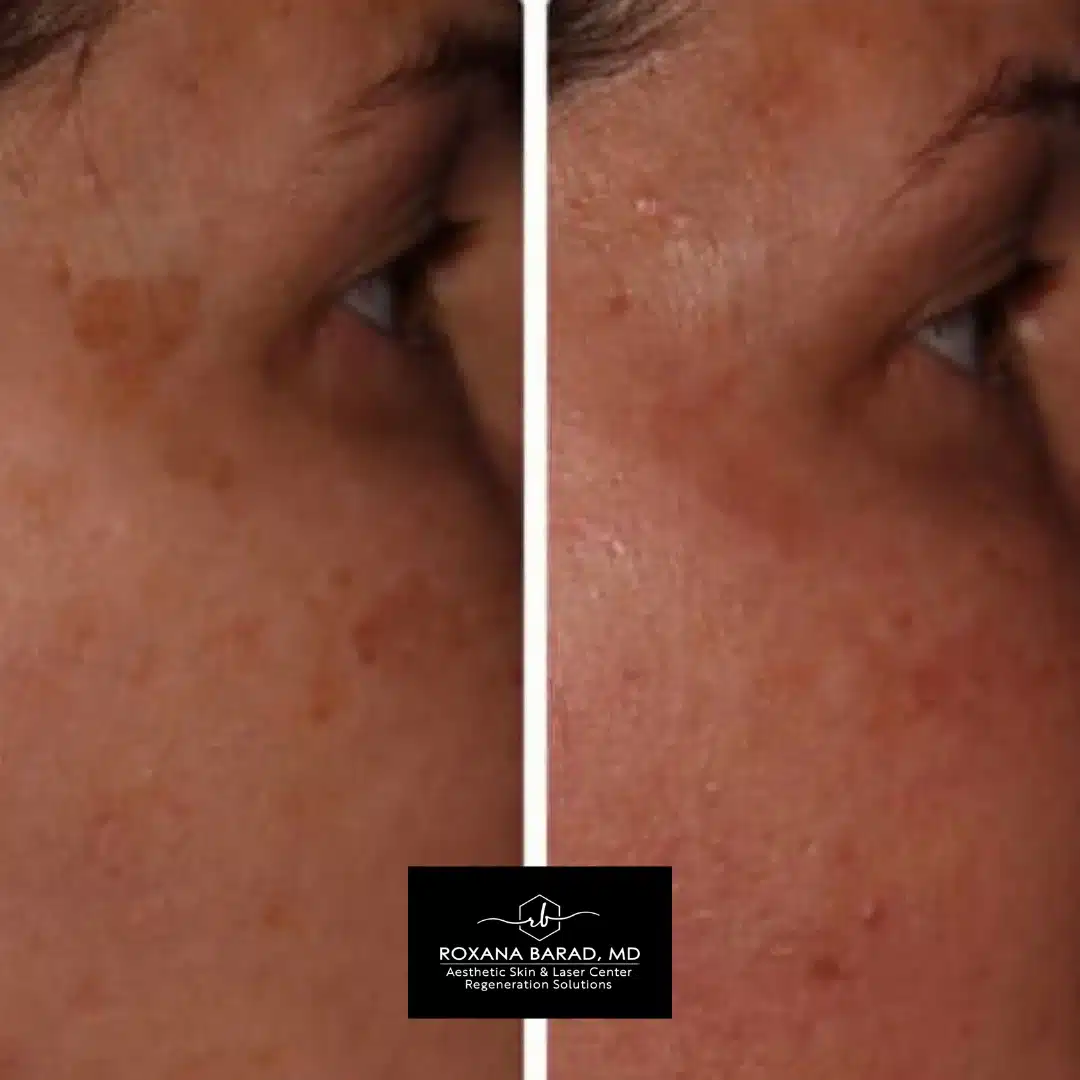
Enlighten PICO Genesis is a laser treatment that combines ultra-short picosecond pulses with nanosecond technology to target pigment in the skin. A picosecond is a trillionth of a second, and delivering energy that fast changes what happens when it reaches the pigment.
Older pigment lasers and intense pulsed light work photothermally: they heat the pigment until it breaks down, which also heats the surrounding tissue. Picosecond pulses work photomechanically, creating a pressure wave that shatters pigment into particles small enough for the body to clear, with far less heat delivered to the skin around it.
That mechanism matters for two reasons. It reduces the risk of heat-related side effects in deeper skin tones, and it allows the same treatment to stimulate collagen alongside clearing pigment, which is why patients often notice texture and clarity improving rather than just spots fading.

The laser is passed over the treatment area, delivering pulses that pass through the skin surface and are absorbed by pigment beneath it. The pressure wave fragments that pigment into particles small enough for the lymphatic system to carry away over the following weeks.
Discrete spots such as sun damage and age spots often darken in the days after treatment before flaking away, which is the expected sequence rather than a problem. Diffuse pigmentation and melasma behave differently, fading gradually across a series rather than lifting away visibly.
Sessions run 20 to 30 minutes depending on the area. The treatment is non-ablative, meaning the skin surface is not broken, so there is no wound to care for and no visible recovery beyond a few hours of redness.
Breaks down sun spots, age spots, and brown patches so the body can remove them.
The picosecond mechanism delivers less heat than IPL or Q-switched lasers, which is what makes it safer on deeper skin.
Lower heat means less risk of aggravating a condition that heat can worsen.
Overall brightness and evenness improve alongside the discrete pigment.
Texture, pore appearance, and fine lines improve as a secondary effect over a course.
Hours of redness rather than days of recovery, and no broken skin to care for.
20 to 30 minutes, which fits into a working day.
Face, neck, chest, shoulders, arms, and hands, wherever sun damage has accumulated.
Pigment accumulates wherever skin has seen the most sun, which is why treatment is rarely limited to the face:
The most common treatment, addressing accumulated pigment across all zones at once.
A high-exposure area where sun damage concentrates early.
Where melasma most often appears and where sun spots are most visible.
Frequently overlooked and consistently among the most exposed areas of the face.
Treated with adjusted settings and appropriate eye protection.
A common melasma site, particularly in patients with hormonal pigmentation.
Treated as part of a full face session or alone where pigment has concentrated.
Including the transition to the neck, where tone differences become noticeable.
High exposure, thinner skin, and frequently missed by daily sunscreen.
The chest, where sun damage often shows earlier and more obviously than on the face.
A high-exposure area for anyone who spends time outdoors.
Where age spots are among the most noticeable signs of accumulated exposure.
Treated for diffuse sun damage and scattered pigmentation.
Good candidates are adults with sun damage, age spots, uneven tone, or post-inflammatory pigmentation who want improvement without significant downtime. It also suits patients who have been told other pigment treatments are not appropriate for their skin tone, since the picosecond mechanism deposits less heat than IPL or Q-switched alternatives.
One point comes before all others. Any pigmented spot that is new, changing, irregular in shape or color, or asymmetric needs to be evaluated by a dermatologist before any laser is used on it. Treating an undiagnosed melanoma removes the evidence and delays diagnosis, which is why we screen for it and why we will refer you rather than treat if anything looks uncertain. This is not a formality.
Treatment is not appropriate during pregnancy or breastfeeding, or where there is active infection or open skin in the treatment area. Recent isotretinoin use and photosensitizing medications both affect timing. Recent sun exposure, sunburn, or self-tanner will postpone a session because added pigment in the skin changes how the laser behaves. Your consultation at Aesthetic Skin & Laser Center covers all of this before anything is booked.
Melasma deserves its own explanation, because it does not behave like the other pigmentation this treatment addresses.
Melasma is a chronic condition driven by hormones, sun, and heat rather than by sun alone. It recurs; it can be triggered by pregnancy, contraception, and even by warmth on the skin, and it can be made worse by aggressive treatment. Some pigment lasers reliably aggravate it. Picosecond technology is among the better-tolerated options precisely because it delivers less heat, which is why it is used here.
What that means in practice is that melasma is managed rather than cured. Treatment reduces the pigment, and maintenance sessions alongside daily broad-spectrum sun protection keep it reduced. Anyone promising to clear melasma permanently is describing something the condition does not allow. Your plan will be set with that reality in it rather than around it.
Your skin is cleansed, and protective eyewear is fitted. Topical numbing is available, and many patients treat without it, since the sensation is brief.
The handpiece is passed across the area in sections. Most patients describe a snapping sensation, sharper over concentrated spots and barely noticeable over clearer skin. A full face takes 20 to 30 minutes.
Afterward, the skin looks flushed, similar to mild sunburn, and settles within a few hours. Over the following days, discrete spots often darken and then flake away. That is the treatment working rather than a reaction, and it is worth knowing in advance so it does not alarm you.

Pigment that is cleared is cleared. Once a spot has been broken down and carried away by the lymphatic system, that particular pigment does not return.
New pigment is a different question, and it is the honest one. Sun exposure creates new pigmentation continuously, so results hold for as long as your skin is protected and no longer. Patients who wear daily broad-spectrum sunscreen frequently keep their results for years. Patients who do not will see new spots appear within a season or two, and that has nothing to do with whether the treatment worked.
Melasma sits apart again. Because it is chronic and hormonally driven, it needs maintenance regardless of sun protection, though sun protection still makes a substantial difference in how often it occurs.
We offer several treatments that address pigmentation, and which one suits you depends on your skin tone, the type of pigment, and how much downtime you can accept:
Treatment | How It Works | Downtime | Best Suited To |
|---|---|---|---|
Enlighten PICO Genesis | Picosecond pressure waves shatter pigment with minimal heat | Hours of redness | Deeper skin tones, melasma, mixed pigment concerns |
Icon Photofacial (IPL) | Broad-spectrum light absorbed by pigment and vessels | Spots darken then flake | Fair skin with sun damage and redness together |
Hollywood Spectra Laser Peel | Laser peel targeting pigment and overall tone | Minimal | Overall brightening and a same-day glow |
LaseMD Ultra | Fractional laser with topical delivery | A few days | Texture and pigment together, with deeper remodeling |
Chemical Peels | Chemical exfoliation of pigmented surface layers | Days of peeling | Superficial pigment and texture, at lower cost |
The most common question is how this differs from IPL. IPL heats pigment, which works well on fair skin with sun damage but carries more risk on deeper tones and can aggravate melasma. PICO Genesis works mechanically with far less heat, which is why it is the option we reach for when skin tone or melasma is part of the picture. Hollywood Spectra and chemical peels address surface brightening and suit different goals again. Your consultation decides between them rather than a page.
Physician-led laser expertise: Treatment is guided by Dr. Roxana Barad, a board-certified physician with over 20 years in aesthetic medicine and a member of the American Society for Laser Medicine and Surgery.
The right device for your skin: With several pigment treatments available here, the recommendation comes from matching your tone and pigment type to the technology rather than from what is in the room.
Lesions screened before treatment: Anything new, changing, or irregular is assessed or referred before a laser goes near it.
Honest about melasma: You will be told it is managed rather than cured, and given a maintenance plan rather than a promise.
Customized treatment plans: Settings, session count, and spacing are set for your skin and the pigment being treated.
Aftercare that protects the result: Sun protection guidance is part of the treatment, because without it the result does not hold.
Aesthetic Skin & Laser Center offers Enlighten PICO Genesis in Pittsburgh, PA, welcoming patients from across the region, including:
Pigment that has been cleared does not return. New pigment forms with sun exposure, so how long your results last depends heavily on sun protection. Patients who wear daily broad-spectrum sunscreen often keep their results for years.
Most patients describe a brief snapping sensation, sharper over concentrated pigment and barely noticeable elsewhere. Topical numbing is available, and many patients choose to treat without it.
A series is usual rather than a single treatment, and the number depends on how much pigment there is, what type it is, and how your skin responds. Melasma generally needs ongoing maintenance rather than a fixed course. Your provider will set the plan at consultation.
Discrete spots often darken within days and then flake away over the following week, which is the clearest early sign. Diffuse pigmentation and overall clarity improve more gradually across the series.
Yes, and it commonly is, though sequencing matters. Combining pigment treatment with texture or collagen work is planned so the skin is not being treated from two directions at once. Your provider will set the order.
Cost depends on the area treated and how many sessions your plan includes, so pricing is confirmed at consultation once the plan is set. Patient financing is available for patients who would prefer to spread the cost across a course.
It is one of the better options available. Picosecond pulses work by pressure rather than heat, and heat is what drives the pigmentation risk that makes many lasers and IPL unsuitable for deeper skin. That does not make it risk-free: your skin tone is assessed, settings are adjusted for it, and a test area may be treated first.
IPL uses broad-spectrum light absorbed by pigment and blood vessels, which makes it effective on fair skin with sun damage and redness together. PICO Genesis uses picosecond pulses that shatter pigment mechanically with far less heat. The practical difference is skin tone and melasma: IPL carries more risk on deeper tones and can aggravate melasma, while PICO Genesis is the option we choose when either is part of the picture.
Beforehand, avoid sun exposure and self-tanner for at least two weeks and pause retinoids and acids for several days. Afterward, wear daily broad-spectrum sunscreen, let darkened spots flake away without picking, avoid heat and hard exercise for a day or two, and keep skincare gentle until your skin feels normal.
The pigment that was treated will not, but new pigment can form. Sun exposure is what creates it, so daily sun protection is what determines whether you are still happy in a year. Melasma is different again: it is chronic and recurs regardless, which is why it is managed with maintenance rather than treated once.
If sun damage, uneven tone, or melasma has stopped responding to what you are using at home, a consultation will establish what kind of pigment you are dealing with and which of our treatments fits your skin. That assessment is the part that decides the result.
Visit us at 4312 Penn Ave, Pittsburgh, PA 15224, call 412-683-3358, or contact us online to schedule with Dr. Barad and the team.